Call in for additional information.
No Appointment Necessary.
Get Healthy!
- Posted August 7, 2026
Wildfire Smoke An Increasing Hazard To U.S. Pregnancies, Study Says
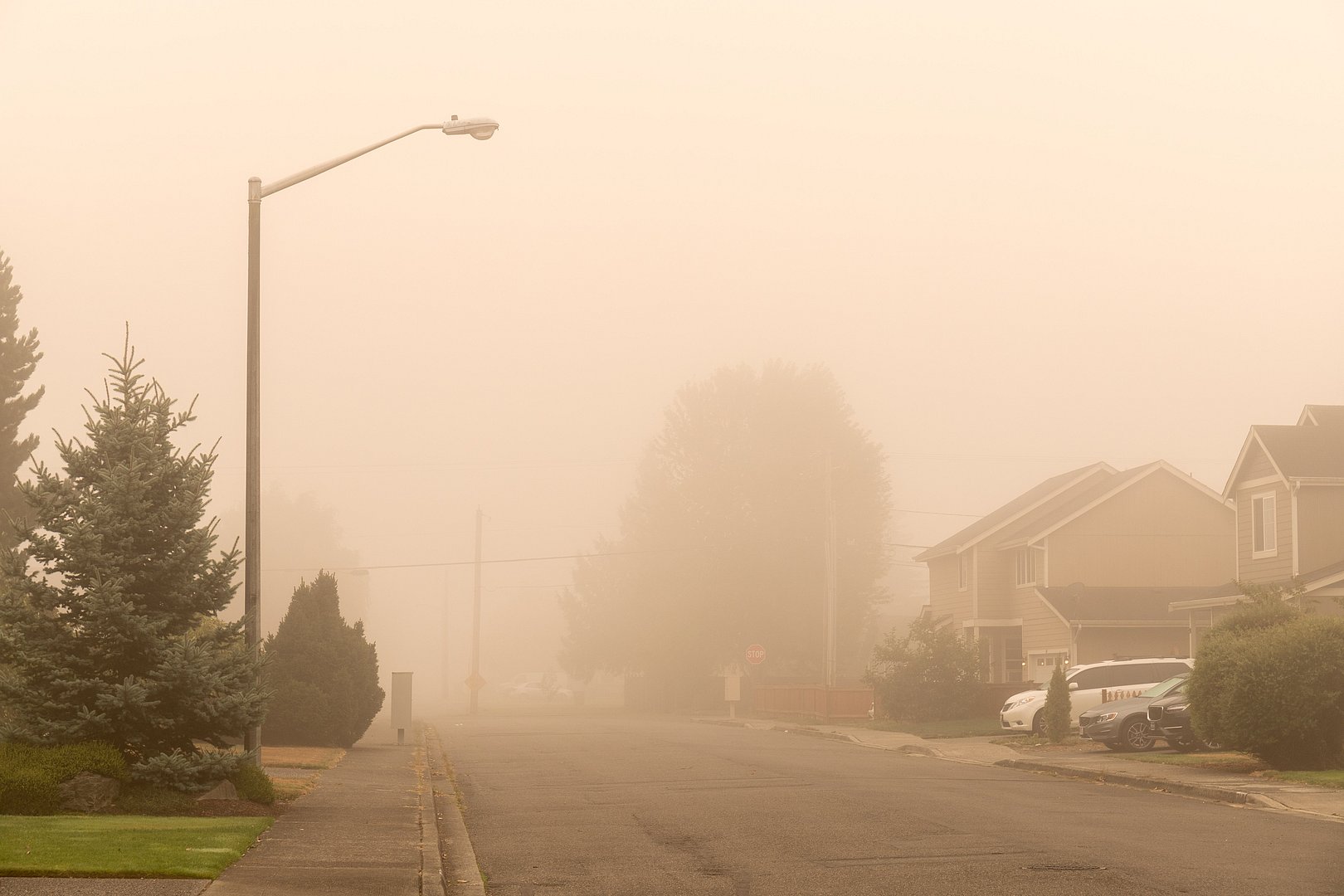
Wildfire smoke has become a major factor in the way air pollution affects pregnancies in the U.S., a new study says.
Prenatal exposure to air pollution caused by wildfires has more than doubled in recent years, as climate change creates tinderbox conditions in American and Canadian forests, researchers reported today in the journal Frontiers in Environmental Health.
This smoke is threatening to undermine improvements in air quality from reductions in pollution from cars and factories, researchers said.
“Those gains have genuinely protected pregnant people and unborn babies, and without them exposures today would be considerably worse,” lead researcher Menglu Liang, an assistant clinical professor at the University of Maryland, said in a news release.
“What our findings show is that wildfire smoke is offsetting a growing share of these hard-won improvements,” Liang said.
Air pollution exposure in the womb is thought to increase risk for a number of health problems in babies, including low birth weight, preterm birth, autism and asthma, according to the American Pregnancy Association.
“These outcomes matter well beyond the delivery room and harms experienced before birth can echo for decades,” Liang said. “That makes prenatal exposure a particular public health concern.”
For the new study, researchers ran two computer models to simulate air pollution, using federal air quality data. The first included human and natural sources of particle pollution, including cars, industry and wildfires, while the second removed all wildfire pollution from the equation.
Particle pollution primarily involves particulate matter that’s smaller than 2.5 microns, also known as PM 2.5, according to the U.S. Environmental Protection Agency. By comparison, a human hair is 50 to 70 microns wide.
Particles this small can infiltrate the bloodstream and make their way to the womb, potentially harming fetal health and development.
Researchers compared their air pollution models against more than 64 million pregnancies that occurred between 2003 and 2019 in 2,842 counties across 48 states.
Results showed that daily prenatal exposure to particle pollution from all sources decreased by about 34% on average.
But when the pollution from wildfires was excluded, the decline in air pollution was steeper, around 37%, researchers said.
During the study period, wildfire contributions to total prenatal air pollution exposure more than doubled, from 3.7% to 8.2%, the study found.
By the end, about 65% of days where air quality exceeded safe levels for pregnancy could be attributed to smoke from wildfires, researchers said.
“By 2019, wildfire smoke had become the dominant contributor to high-pollution days experienced during pregnancy in the United States,” Liang said.
Some parts of the nation are more affected by wildfire smoke than others. For example, air pollution from wildfires surged from 5% to 13% in the Pacific Northwest, and from about 4% to 10% in Western states, the research showed.
The American Pregnancy Association urges women who want to protect themselves from air pollution during pregnancy to:
Keep track of the Air Quality Index, and stay inside when air is unsafe.
Use an air purifier to filter indoor air.
Place air-purifying plants throughout the home.
More information
The American Pregnancy Association has more about air pollution and pregnancy.
SOURCE: Frontiers, news release, Aug. 7, 2026
